The Uncompromising Pavel Durov
- Brady Loenhart
- October 3, 2025
- 16 mins
- Tech Leadership
- encryption independence open source privacy security tech ceo telegram
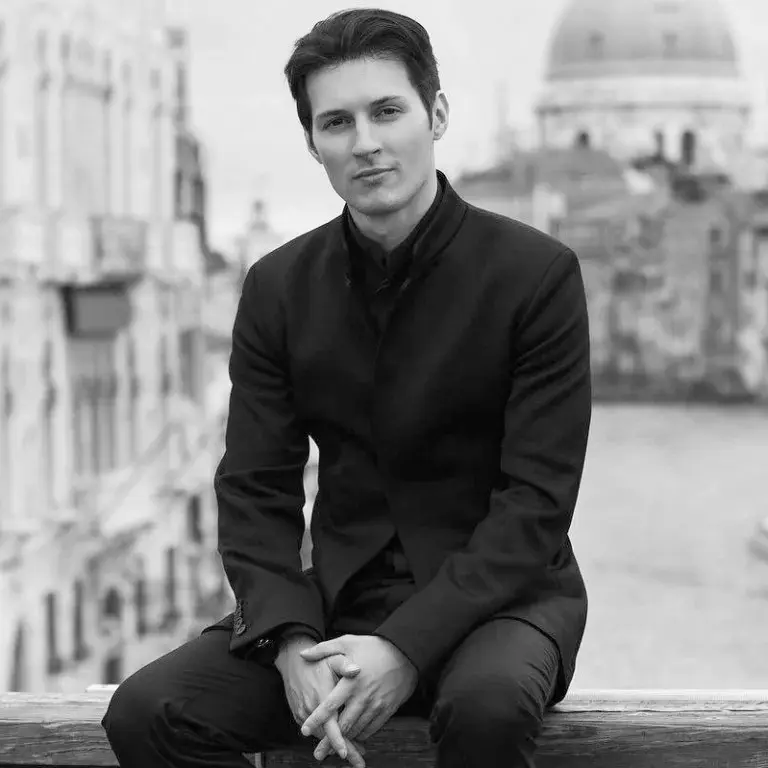
Pavel Durov stands alone among tech CEOs—a billionaire who chose principles over profits, arrest over capitulation, and users over governments. While peers like Zuckerberg bent to government pressure, Durov built a messaging empire on an unshakeable foundation: 100% ownership, zero compromises, and complete independence.
A founder who lost everything once and learned the lesson
Durov’s uncompromising stance stems from painful experience. In 2014, Russia’s FSB demanded personal data of Ukrainian protesters using VKontakte, the social network he founded. He refused, calling it “treason against all those millions of Ukrainians who trust us.”
The result? Forcibly removed as CEO and exiled from Russia. He lost his company, his home, and his country—but kept his values. That experience shaped everything that followed.
When he created Telegram in 2013 with his brother Nikolai, Durov made one ironclad decision: maintain 100% ownership. No venture capitalists. No board of directors. No shareholders to appease. Just complete control over a platform serving 1 billion monthly active users as of March 2025.
The funding strategy that enables independence
How does someone build a billion-user platform without selling equity? Through creative debt financing. Since 2021, Telegram raised approximately $2.4 billion through convertible bonds—debt that can convert to equity only if Telegram goes public.
Investors include BlackRock, Mubadala, and Abu Dhabi Catalyst Partners. They get bond payments and potential IPO upside, but zero management rights, no board seats, and no say in company decisions.
The May 2025 bond offering exemplifies this strategy: 1.7 billion dollars at 9% interest, maturing 2030. Durov emphasized that “buying bonds is not a basis for managing a social network.” He personally purchased over 20 million dollars of the July 2023 bonds himself—putting his money where his principles are.
This strategy means bondholders cannot pressure him to compromise privacy for profits or comply with government censorship demands. For 11 years (2013-2024), Telegram operated at a loss. Most investors would have forced monetization or an exit. Durov simply waited, funding losses from his Bitcoin investments made in 2013 when he bought thousands of BTC at $700 each.
Principles over everything: The Lex Fridman interview
On October 1, 2025, Durov sat for a 4-hour 43-minute interview with Lex Fridman (Episode #482). The conversation revealed a founder unlike any other in tech. When asked if he would ever share private user messages with governments or intelligence agencies, his answer was absolute:
No. We designed a system in a way that’s impossible. We would rather shut Telegram down in a certain country than do that because we made a promise to our users. Telegram has never shared a single private message with anyone, including governments and intelligence services.
He went further: “If they put me into prison for 20 years… I would rather starve myself to death and die there, reboot the whole game than do something stupid.”
This isn’t posturing—it’s consistent with 20+ years of behavior. His core philosophy: “Privacy is not for sale, and human rights should not be compromised out of fear or greed.” He identifies fear and greed as the biggest enemies of freedom, adding: “To be truly free, you should be ready to risk everything for freedom.”
On death and imprisonment: “There’s no point living your life in fear… I would rather lose everything I have than yield to this pressure because, if you submit and agree with something fundamentally wrong, you become broken inside, you become a shell of your former self on a deep biological and spiritual level.”
The price of refusing to compromise
Russia: Forced exile (2014)
While never formally arrested in Russia, Durov faced severe government pressure. During 2011-2013 protests, police came to his apartment demanding removal of opposition politicians’ pages from VKontakte. His response? He posted a picture of a dog with its tongue out and didn’t answer the door.
In April 2014, Russia’s FSB demanded personal data of Ukrainian protesters during Euromaidan and ordered closure of anti-corruption activist Alexei Navalny’s VK group. Durov refused both demands and published the FSB orders on his own VK page, calling them unlawful.
On April 21, 2014, he was forcibly dismissed as CEO. The next day, he fled Russia, publishing “Seven Reasons Not to Return to Russia.” Control of VKontakte passed to Putin allies, who immediately began censoring opposition voices and complying with surveillance demands—exactly what Durov refused to do.
In 2018, Russia banned Telegram after Durov refused to provide encryption keys to the FSB. Mass protests erupted in Moscow, with people carrying paper airplane symbols (Telegram’s logo). Durov created a “Digital Resistance” movement, spending millions on rotating IP addresses and proxy servers to bypass the ban. Russian citizens kept using Telegram via VPNs. In June 2020, Russia lifted the ban—the government lost.
The poisoning incident (Spring 2018)
During spring 2018, while Russia was banning Telegram and Durov was raising $1.7 billion for the TON blockchain project, he experienced what experts believe was a nerve-agent poisoning attempt. He returned home to find a “weird neighbor” had left something at his door.
Within an hour, he collapsed with intense pain throughout his body, progressive loss of eyesight and hearing, extreme difficulty breathing, and acute pain in his heart, stomach, and blood vessels. Blood vessels burst across his body. He couldn’t walk for two weeks.
He didn’t report it to police, didn’t go to a hospital, and kept it secret for seven years, revealing it only in the October 2025 Lex Fridman podcast. Christo Grozev, the journalist who investigated the Skripal and Navalny poisonings, stated the symptoms were consistent with nerve-agent poisoning and called for investigation.
Durov said: “That was the only instant in my life when I thought I was dying.” The timing—immediately after Russia banned Telegram and coinciding with the March 2018 Skripal poisoning in the UK—suggests a state operation. Yet Durov survived without medical treatment. What’s clear: maintaining independence from powerful governments carries real physical danger.
France: Unprecedented CEO arrest (August 2024)
On August 24, 2024, Durov was arrested at Paris-Le Bourget Airport upon exiting his private jet from Azerbaijan. An arrest warrant had been issued in March 2024. After 96 hours of detention on a concrete bed with no windows, he was formally charged on August 28 with six offenses: complicity in distributing child exploitation material, drug trafficking, money laundering, organized fraud, refusal to communicate with authorities, and providing cryptology services without declaration. Maximum penalty: 10 years imprisonment and €500,000 fine.
He was released on €5-6 million bail but barred from leaving France, required to report to police twice weekly (later reduced to every 14 days). As of October 2025, he remains under judicial supervision with no trial date set. French authorities claim Telegram’s lack of content moderation facilitates criminal activity. President Macron insisted the arrest was judicial, not political.
Durov called it “legally and logically absurd.” In June 2025, he told Tucker Carlson: “Very disconcerting… I’m still looking for answers. I’m puzzled… it is false to say we did not respond to legally binding legal requests.” He criticized “using laws from pre-smartphone era to charge a CEO with crimes committed by third parties.”
When French intelligence approached him while under investigation, demanding he censor conservative candidates in Romania’s presidential election and remove political channels in Moldova, Durov publicly disclosed the pressure attempt. Despite months of restrictions, he stated: “The more pressure I get, the more resilient and defiant I become.”
What makes Durov different from other tech CEOs
The discipline behind the principles
Durov isn’t just talking—he lives it. For over 20 years: zero alcohol, tobacco, coffee, pills, or drugs. Every morning: 300 push-ups and 300 squats. Gym 5-6 times weekly, 1-2 hours daily. Intermittent fasting, no processed sugar, no phone usage except testing Telegram features. Multi-hour lake swims for meditation. Regular ice baths.
He calls self-discipline “the main muscle you can exercise… if you get to train that one, everything else just comes by itself.”
He avoids algorithmic feeds and social media consumption. No phone in mornings to preserve “quiet thinking time.” “If you open your phone first thing in the morning, what you end up being is a creature that is told what to think about for the rest of the day.”
This information diet, combined with financial independence from Bitcoin (he predicts $1 million per BTC), means he cannot be bought, pressured, or manipulated.
The lean team philosophy
His team reflects this philosophy: only ~40 core engineers managing ~100,000 servers across multiple continents serving 1 billion users. His philosophy: “Quantity of employees doesn’t translate to quality of the product. In many cases, it’s the opposite.” When team members can’t hire more help, they’re forced to automate—keeping Telegram lean, fast, and resistant to bureaucracy.
Compare this to Meta’s 80,000+ employees or Google’s 180,000+. Durov built something more efficient, more private, and more independent with a fraction of the headcount.
The Zuckerberg comparison
In August 2024, Zuckerberg admitted that the Biden administration “repeatedly pressured our teams for months to censor certain COVID-19 content.” Meta “demoted” the Hunter Biden laptop story after FBI pressure. Facebook, Instagram, and WhatsApp collect and monetize user data extensively—billions earned from personalized ads built on surveillance. Meta provides backdoor access to government agencies and has documented failures addressing child exploitation on Instagram.
When Elon Musk commented on why Zuckerberg wasn’t arrested like Durov: “Because he already caved into censorship pressure… he censors free speech and gives governments backdoor access to user data.”
Durov stated: “It’s quite sad for me that exploiting user activity data, metadata, and other types of personal information for ad targeting became synonymous with the Internet industry.”
The key difference: Zuckerberg built a business model on monetizing surveillance. Durov built a business model on refusing it.
Telegram’s privacy architecture: Built to resist surveillance
Technical encryption implementation
Telegram uses MTProto 2.0, a proprietary encryption protocol featuring AES-256 encryption with SHA-256 hashing. Regular cloud chats use client-server encryption, allowing synchronization across devices. Secret chats offer true end-to-end encryption with keys known only to participants—messages never stored on servers, self-destructing messages, screenshot prevention.
The distributed architecture is designed to resist government access: encryption keys split across multiple data centers in different legal jurisdictions, controlled by different legal entities. Durov claims accessing user data requires “several court orders from different jurisdictions.” The University of Udine formally verified MTProto 2.0 in 2020 using ProVerif, confirming authentication, integrity, confidentiality, and perfect forward secrecy.
The advertising model that respects privacy
Unlike every major platform, Telegram does not run personalized ads based on user data. Official policy: “No user data is mined or analyzed to display ads.” Sponsored messages appear only in public channels with 1,000+ subscribers, targeted solely by channel topic (not user behavior). Premium subscribers see zero ads. Channel owners receive 50% of ad revenue.
Telegram collects minimal data: phone number, screen name, username, profile picture, cloud chat content (encrypted on servers), and IP address (maximum 12 months retention). It does NOT collect: browsing history, app usage patterns, real name (not verified), gender, age (optional), or secret chat content. Data is used only for service function—cloud sync, contact discovery, spam prevention—never for advertising.
Compare this to WhatsApp’s extensive metadata collection (message timing, frequency patterns, contacts) shared across Meta’s ecosystem, or Facebook’s comprehensive surveillance apparatus monetizing every action. Durov refused to build an advertising surveillance machine, even though it would be far more profitable.
Recent breakthrough: Finally profitable
In December 2024, Telegram achieved profitability for the first time: over 547 million profit. The 2025 projection: $700M+ profit. This proves that privacy and profitability can coexist.
Explosive growth statistics
- 1 billion monthly active users (March 2025)
- 450 million daily active users
- 2.5 million new signups daily
- Largest market: India (~100 million users)
- Users open Telegram average 21 times per day
- Average session duration: 41 minutes
- 15 billion messages exchanged daily
The business model that respects users
- 12 million Premium subscribers (tripled during 2024) at ~$5/month
- Revenue split: ~50% Premium subscriptions, ~50% advertising
- Context-based advertising only in large public channels—never personalized
- Crypto/TON integration driving additional revenue
- Channel owners receive 50% of ad revenue
- Major advertisers secured: Samsung
New features driving growth (2024-2025)
- Mini Apps 2.0 with full-screen mode, home screen icons, geolocation
- Telegram Stars virtual currency for creator monetization
- Affiliate programs for content creators
- Paid media for channels
- NFT-based collectible gifts
- Direct messages for channel subscribers (June 2025)
No user data mining. No personalized tracking. No algorithmic exploitation. Just a sustainable business built on respecting users.
The Romania/Moldova test: When principles met consequences
The most recent test of Durov’s principles came in late 2024. While restricted to France under investigation, French intelligence approached him through intermediaries, demanding he censor channels supporting conservative candidates in Romania’s presidential election and remove political channels in Moldova that the French and Moldovan governments disliked.
Standard operating procedure for most tech CEOs: quietly comply, sign an NDA, move on.
Durov’s response: “If you think that, because I’m stuck here, you can tell me what to do, you are very wrong. I would rather do the opposite every time.”
He refused. Then he went public, stating: “I never signed an NDA. I don’t ever sign NDAs with any people like that, I want to be able to tell the world what’s going on.”
He publicly disclosed every detail: “I’m going to keep telling the world about every instance any government, in this case in particular the French government, tries to force me to do anything.” On the Moldova channels, he said: “We refused to act on this request” to remove “legitimate political channels that simply voiced political positions disliked by the French and Moldovan governments.”
His statement captured the stakes: “You can’t ‘defend democracy’ by destroying democracy. You can’t ‘fight election interference’ by interfering with elections. You either have freedom of speech and fair elections—or you don’t.”
Content moderation reality check
After the France arrest, Telegram significantly increased moderation efforts: hired 750+ content moderation contractors, updated privacy policy (September 2024) to share user data for valid legal requests, fulfilled 900 US government requests (October-December 2024) affecting 2,250+ users, compared to only 14 requests (108 users) in the first nine months of 2024.
This represents a major policy shift, though message content remains inaccessible—only IP addresses and phone numbers are provided when legally required. The line Durov won’t cross: direct access to private messages.
The choice every tech CEO faces
Every tech CEO eventually faces the same pressure: Governments demand backdoors, censorship, and user data. Investors demand growth at any cost. Advertisers demand more invasive tracking. The pattern is consistent:
- Zuckerberg’s Meta caves to censorship, provides backdoors, builds advertising surveillance
- Pre-Musk Twitter shadow-banned, censored stories, coordinated with government agencies
- Even Apple, positioned as privacy-focused, removed VPN apps in China and provides iCloud data to Chinese authorities
Durov made a different choice at every fork in the road:
- Funding source: Convertible bonds instead of equity (maintains 100% ownership)
- Revenue model: Premium subscriptions and context-based ads instead of surveillance advertising
- Encryption: MTProto 2.0 with distributed keys instead of centralized access
- Government demands: Public refusal and disclosure instead of quiet compliance
- Market access: Willingness to exit countries instead of compromising encryption
- Personal sacrifice: Arrest, exile, alleged poisoning instead of capitulation
The result? A platform serving 1 billion users that has never shared a single private message with any government. A $30+ billion company (estimated valuation) where the founder maintains complete control. A profitable business built without exploiting user data.
The inspiring message: What Durov proves is possible
Lex Fridman, who spent weeks with Durov, assessed: “He’s one of the most principled and fearless humans I’ve ever met… he’s 100% that guy”—actually living the disciplined, principled lifestyle he advocates. Fridman noted: “There’s a deep integrity to you that I think is good to show to the world… the last wall of protection is the actual people that are running the company.”
For founders: Durov proves that venture capital is not inevitable, that you don’t need to sell control to scale, that profitability without surveillance is possible, and that saying no to governments won’t destroy your company. His message: Build something great, maintain ownership, refuse to compromise, and be prepared to lose everything if necessary. Freedom matters more than money (Свобода дороже денег).
For users: In an era where tech giants treat people as products to be surveilled and monetized, Telegram demonstrates an alternative. When WhatsApp updated its policy to share more data with Facebook in 2021, 5.6 million users fled to Telegram in days. They found a platform where the CEO would literally rather go to prison than betray user privacy. Where 100% ownership means no shareholders demanding exploitation. Where profitability doesn’t require surveillance. Where freedom of speech is protected across political ideologies.
The bottom line: Tech leadership redefined
Pavel Durov stands as proof that tech CEOs don’t have to throw users under the bus. That independence is worth more than investor money. That principles can coexist with billions of users and profitability. That one person refusing to compromise can build something that resists surveillance states, maintains user privacy, and proves that another path exists.
While other tech CEOs bend to every pressure—government censorship demands, advertiser requirements, investor growth mandates—Durov simply says no. Then he builds systems that make saying no permanent. Then he tells the world what happened.
He lost his first company, his country, and his freedom of movement. He may have survived a state-sponsored poisoning. He faces 10 years in prison. And he still won’t compromise.
When French intelligence tried to leverage his arrest to force censorship, he refused and went public. When Russia demanded encryption keys, he chose exile over compliance. When investors wanted board seats, he chose bonds over equity. When profitability required surveillance, he chose to wait 11 years.
Every decision, every sacrifice, every refusal reinforces the same message: user privacy and freedom of speech are non-negotiable. Not for money. Not for market access. Not for personal freedom. Not even for his life.
That’s what makes him inspiring. That’s what makes Telegram different. That’s what proves that tech doesn’t have to be built on surveillance and compromise. One founder, with sufficient discipline and determination, can build a billion-user platform that actually protects its users.
One founder, 100% ownership, zero compromises—and 1 billion users who trust him because he’s proven, again and again, that he’ll protect them no matter the cost.
This is what tech leadership looks like when founders refuse to throw users under the bus.